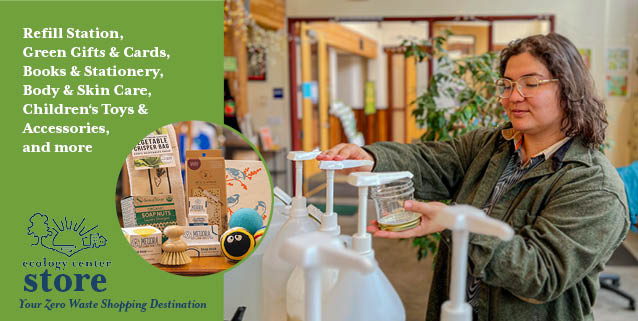
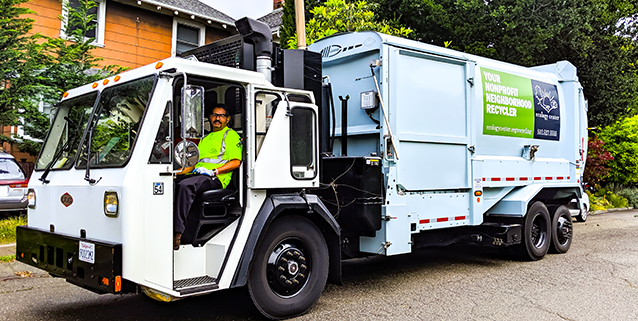
The ECOLOGY CENTER provides the public with reliable information, tools, hands-on training, referrals, strategies, infrastructure, and models for sustainable living. Our programs enable people to adopt practices that are environmentally and socially responsible. We run Berkeley's residential curbside recycling program, the Berkeley Farmers' Markets, Farm Fresh Choice food justice program, EcoHouse demonstration home and garden, the Ecology Center Store, and a variety of Information and Climate Change Action programs.
|
Join Andy Katz, Sierra Club delegate to the recent UN climate negotiations in Durban and EBMUD Director, for a report-back and conversation about the state of the negotiations to secure a global agreement to reduce greenhouse gas emissions and prepare for the grave threats posed by climate change. Following a talk and Q&A, we'll engage in discussion about state and regional climate issues and how we can be effective locally in the face of international inertia. Thursday, January 26, 7pm - 9pm at the Ecology Center. Free. For more information, click here.
|
|
Pacha's Pajamas brings the voices of nature to the stage through story and music, engaging youth in a conversation about the environment and how we depend on each other. Pacha is a little girl with big dreams who spends a lot of time in front of screens and in the city. After an asthma attack, her mother gives her a pair of magical pajamas that make her dreams come to life! She meets an unlikely group of animals, and together they decide to organize a Nature Festival to unite all species and perform for a better world! The book Pacha's Pajamas will be on sale at the Ecology Center Store, along with Pacha's Pajamas musical EP, a CD featuring rapper/actor Mos Def, poet/rapper Talib Kweli, and talented kids! Sunday, January 29, 3pm at the Ecology Center. For more information, click here.
|
|
Join us for a screening and discussion of The Economics of Happiness. The film describes a world moving simultaneously in two opposing directions. On the one hand, an unholy alliance of governments and big business continues to promote globalization and the consolidation of corporate power. At the same time, people all over the world are resisting those policies, demanding a re-regulation of trade and finance—and, far from the old institutions of power, they're starting to forge a very different future. Communities are coming together to re-build more human scale, ecological economies based on a new paradigm - an economics of localization. We hear from a chorus of voices from six continents, telling us that climate change and peak oil give us little choice: we need to localize, to bring the economy home. The Economics of Happiness challenges us to restore our faith in humanity, challenges us to believe that it is possible to build a better world. For more information about this event, click here. |
In late October, 2011, Earth became home to 7 billion people.
Join experts from the Institute for Population Studies (IPS), Global Footprint Network and Earth Island Institute as we explore the complex and critical, yet often not discussed, intersection of population growth and climate change and the effects both have on human health, women's rights, and the social and economic issues we face globally and locally.
We'll begin with a screening of the internationally acclaimed, award winning film, "Mother: Caring for 7 Billion" (www.motherthefilm.com), and follow with a panel and audience discussion. This event is part of the Regenerating Solutions Salon series. Thursday, February 23, 7pm-9pm at the Ecology Center. Free. For more information, click here.
|
|
The Berkeley Edible Gardens Initiative is a campaign to allow neighbors to sell or trade the surplus edibles they produce in their yards (fruits, vegetables, eggs, and honey). Currently, Berkeley’s Municipal Code prohibits this type of activity unless one applies for costly permits. A coalition of local activists and organizations including the Ecology Center has united to propose minor changes to the City’s zoning code that would facilitate the sale and trade of non-processed edibles produced in Berkeley yards, while still respecting the residential nature of our neighborhoods. Click here to learn more and get involved! |
|
The Ecology Center’s Climate Change Action Project helps neighbors, families, co-workers, friends, and other groups to reduce their greenhouse gas emissions. Through a series of free workshops, the center offers tips and ideas for how each of us can significantly downsize our carbon footprints and save money at the same time. Click here to learn more about this fun project.
|